The average city dweller is exposed to a constant ambient noise level of around 60 decibels — roughly the volume of a conversation at arm's length. It doesn't sound like much, but it never stops. Traffic, air conditioning, construction, sirens, the low electrical hum of a building that never sleeps. After a while, you stop noticing it. That's the problem.
What Noise Does to Us
Chronic noise exposure isn't just annoying — it's genuinely harmful. Research from the World Health Organization links sustained environmental noise to elevated blood pressure, disrupted sleep, increased cortisol levels and a higher incidence of cardiovascular disease. The body interprets noise as a low-grade threat, and it responds accordingly: fight-or-flight systems stay activated, stress hormones circulate, and the cumulative toll is real.
Children are particularly vulnerable. Studies in schools near airports show measurable deficits in reading comprehension and memory recall compared to schools in quieter areas. Noise doesn't just distract — it fundamentally impairs cognitive function over time.
The Mountain as Antidote
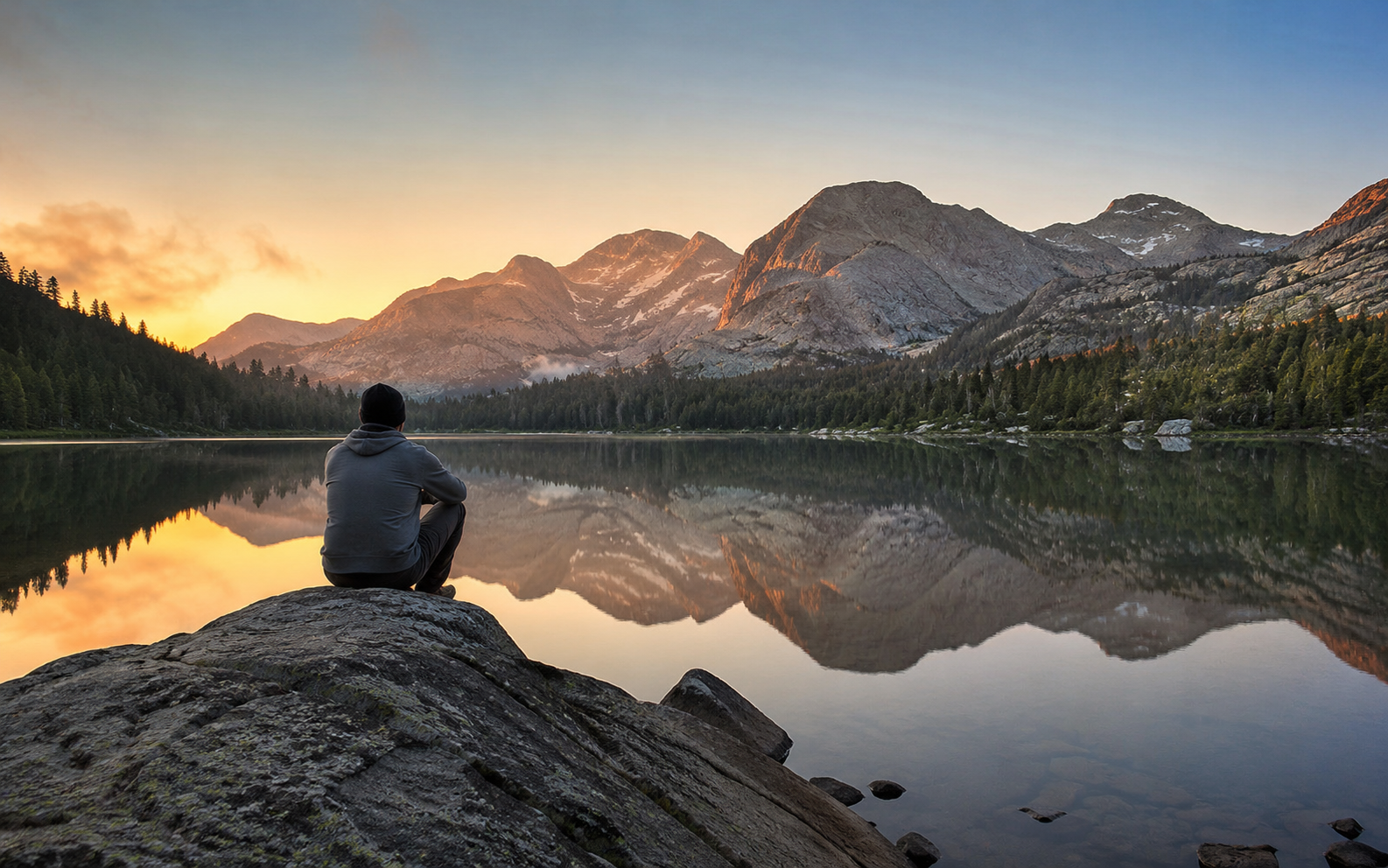
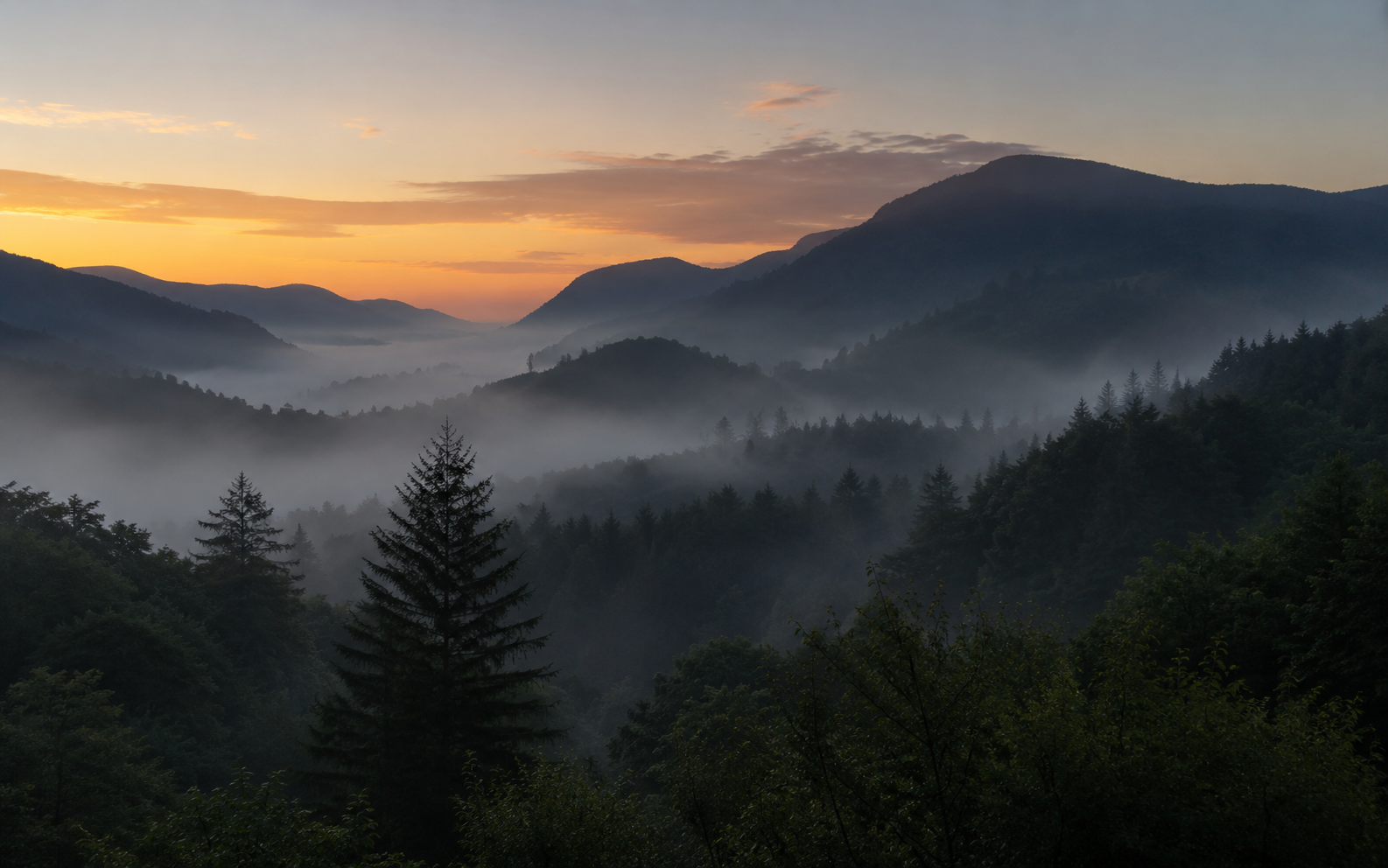
Step out of a cabin at 2,000 metres on a windless morning and the silence is physical. You can feel it in your ears, in your chest, in the way your shoulders drop a centimetre without you telling them to. The ambient noise level in a remote mountain valley can drop below 20 decibels — quieter than a whisper, quieter than a library, quieter than most people have experienced in their adult lives.
That silence does something. Within hours, your nervous system begins to downregulate. Sleep comes easier. Thoughts complete themselves without interruption. The perpetual mental chatter — the kind that keeps you awake at 2am replaying conversations that don't matter — starts to quiet down. Not because you've meditated or done breathwork or followed some ten-step protocol, but simply because the external noise stopped and the internal noise followed.
Silence Is Not Nothing
One of the most common misconceptions about mountain silence is that it's empty. It isn't. True silence is full of sound — it's just sound at a different scale. The creak of cooling timber in a cabin wall. The distant call of a bird you can't identify. Wind moving through pine trees in a pattern that never repeats. A stream that sounds different depending on where you stand. These aren't background noise. They're the foreground, finally audible because everything else has been stripped away.
The Finnish have a word for this — "hiljaisuus" — which translates roughly as the quality of quietness. It's not silence as absence but silence as presence: a positive state, something to be sought rather than simply tolerated.
Bringing It Home
You can't bottle mountain silence, but you can learn from it. Noise-cancelling headphones with nothing playing. Early mornings before the city wakes up. A room with the windows closed and the screens off. These aren't the same as a cabin in the mountains, but they gesture in the same direction. Once you've experienced real quiet, you start to recognise how rare it is — and how much you need it. The mountains don't talk. That's exactly the point.