Mountain tourism is a paradox. The very qualities that draw visitors — clean air, pristine landscapes, undisturbed wildlife — are exactly the things that mass tourism degrades. Every year, popular mountain destinations deal with trail erosion, waste management failures and the slow creep of overdevelopment into once-wild valleys. But the solution isn't to stop visiting. It's to visit better.
The Scale of the Problem
Mountain regions account for roughly 15 to 20 percent of global tourism revenue. That money supports local economies — small hotels, guide services, restaurants and shops that would struggle to exist without visitors. But the ecological cost is real. Trails that see 500 hikers a day erode at ten times the rate of those that see 50. Waste left behind — water bottles, snack wrappers, human waste on busy routes — accumulates faster than volunteer clean-up crews can manage.
Climate change complicates everything. Glaciers that once attracted thousands of visitors annually are retreating. Ski resorts at lower altitudes are losing viable seasons. The mountain environment is already under stress, and tourism adds to that pressure in ways that aren't always obvious to the individual hiker.
What Sustainable Travel Looks Like
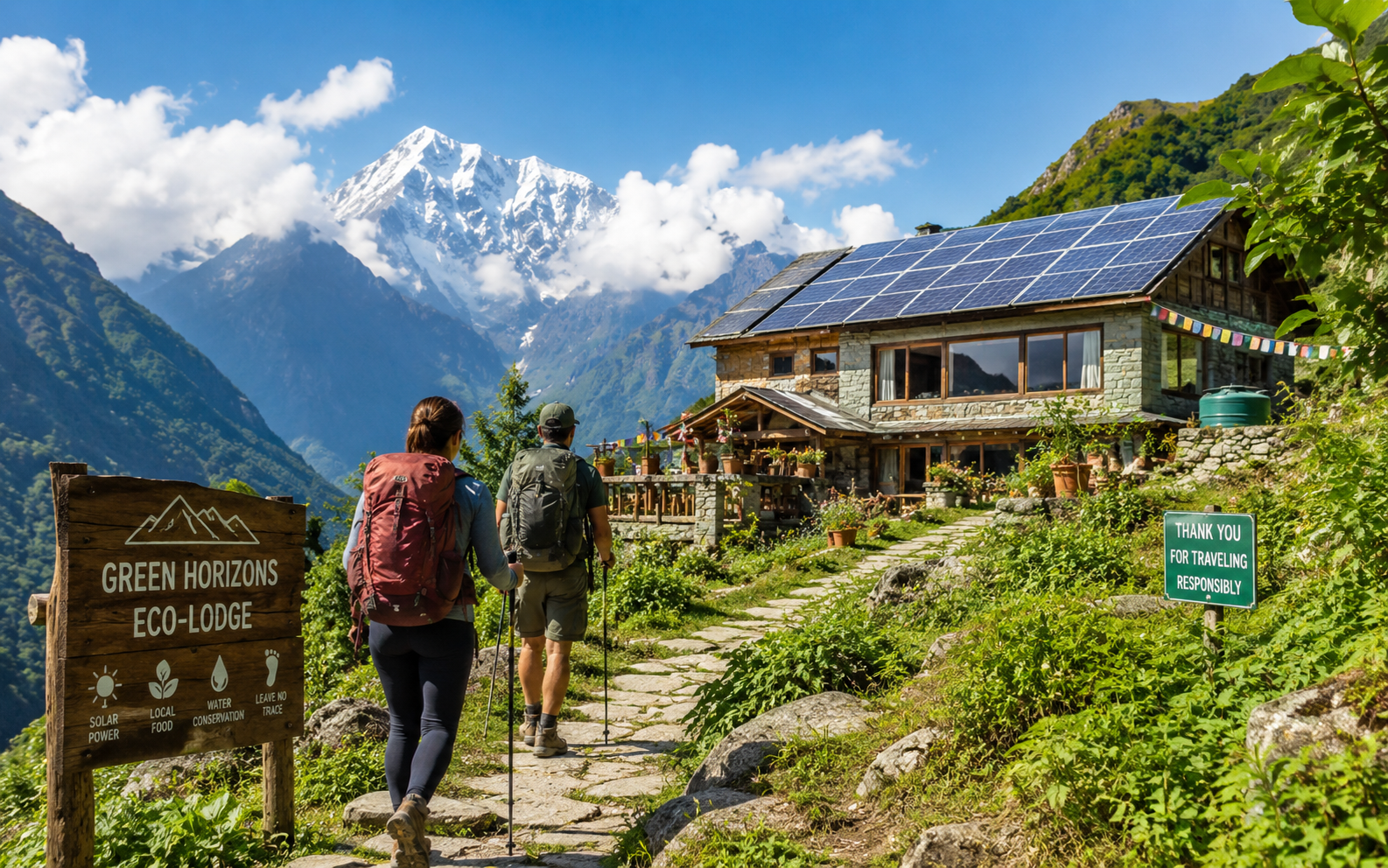
Sustainable mountain tourism isn't about sacrifice. It's about choices. Choosing to visit outside peak season, when trails are less crowded and local businesses need the revenue more. Choosing locally owned accommodation over international chains. Choosing to carry out everything you carry in — including food waste and toilet paper. These aren't heroic acts. They're basic respect for the places we claim to love.
Organisations like the International Union for Conservation of Nature have developed frameworks for balancing tourism revenue with environmental protection in fragile ecosystems. The principles are straightforward: limit visitor numbers in sensitive areas, invest tourism revenue back into conservation, and educate visitors before they arrive — not after the damage is done.
The Role of Local Communities
The best mountain tourism models are community-led. In Nepal, the Annapurna Conservation Area Project channels trekking permit fees directly into local infrastructure and conservation. In the Dolomites, mountain hut associations maintain trails and manage waste with a precision that would impress a Swiss watchmaker. These systems work because the people who live in the mountains have the strongest incentive to protect them.
As visitors, the most useful thing we can do is support these structures. Pay the trail fees. Eat at local restaurants instead of packing supermarket sandwiches. Hire local guides. The money stays in the valley, and the people who receive it become stewards of the landscape, not just bystanders watching it deteriorate.
A Long-Term View
Mountain landscapes operate on geological timescales. A trail carved into granite takes centuries to form and decades to repair once damaged. A forest cleared for a car park doesn't grow back in a season. The decisions we make as travellers today determine what future visitors will find — or won't find — when they arrive. Sustainable tourism isn't a marketing slogan. It's the only version of mountain travel that has a future.