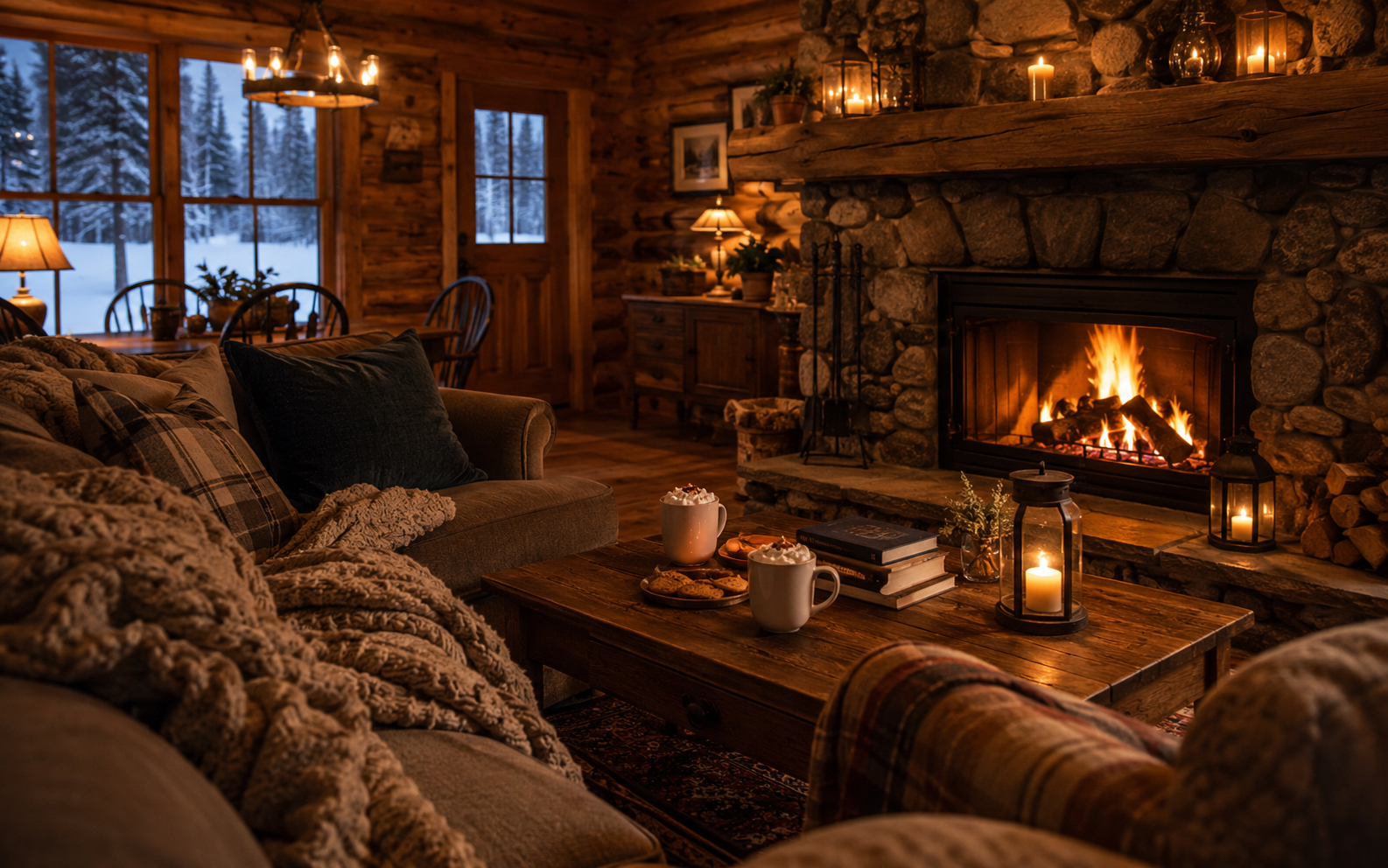
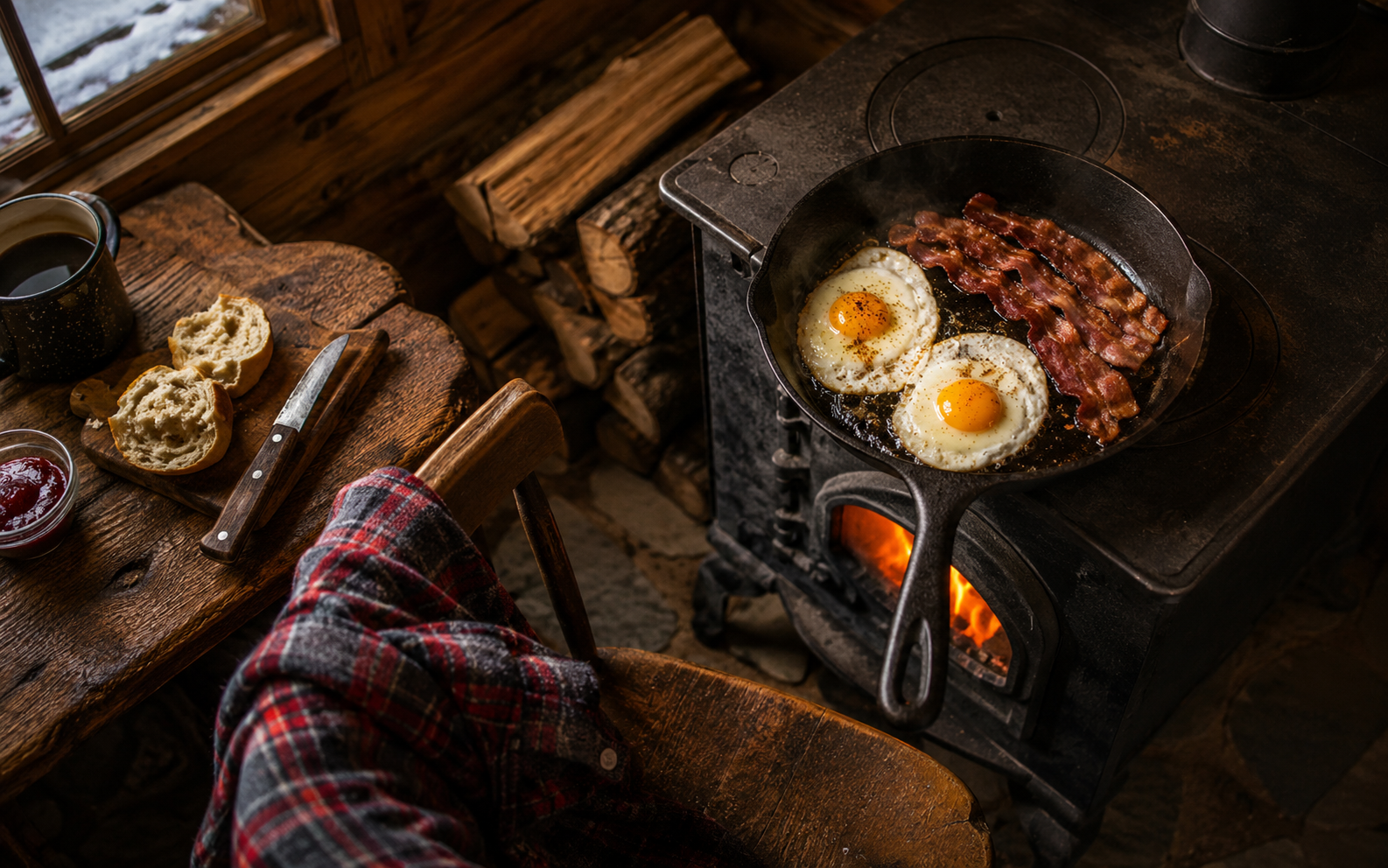
There's a particular kind of meal that only happens in a cabin. It's not fancy. The ingredients are basic, the kitchen is small, and the cook is probably wearing flannel and hasn't showered since yesterday. But somehow, that meal — eaten at a rough wooden table with the fire popping in the background — tastes better than anything you've had in months.
Why Cabin Food Tastes Better
Part of it is hunger. You've been outside all day, breathing cold air, walking or chopping wood or doing something physical that you never do at home. Your body is genuinely hungry, not just bored. Part of it is simplicity. When you only brought six ingredients, the dish is pure. There's nothing to hide behind. A well-cooked steak with salt and a baked potato is, in the right context, a perfect meal.
And part of it is the ritual. Building a fire to cook on — or even just stoking the wood stove while something simmers on the hob — connects you to the meal in a way that pressing buttons on an induction hob never will. The tradition of cooking over open flames is as old as civilisation itself, and there's a reason it still feels satisfying.
The Essential Cabin Kitchen
You don't need much. A cast-iron skillet is the single most useful thing you can bring to a cabin. It goes on the stove, in the oven, over the fire and — in a pinch — serves as a weapon against raccoons. Add a sharp knife, a wooden chopping board, a pot big enough for soup, and you're set.
For provisions, keep it dense and durable. Eggs, bacon, butter, bread, onions, potatoes, a few tins of beans or tomatoes, some good cheese, dried pasta and a bottle of olive oil will get you through a weekend without a single trip to the shops. Coffee is non-negotiable. A French press and ground beans take up almost no space and prevent cabin-morning crises.
Three Meals Worth Mastering
Breakfast: scrambled eggs cooked slowly in butter, with thick-cut toast and coffee. The eggs should take at least ten minutes. If they're done in two, you went too hot. Lunch: whatever's left from last night, warmed in the skillet, maybe with a fried egg on top. Dinner: a one-pot stew. Brown some meat, add onions, throw in whatever vegetables survived the drive, pour in a tin of tomatoes and half a glass of red wine. Let it simmer for an hour while you drink the other half of the bottle.
The Unwritten Rules
Cabin cooking has its own etiquette. The person who cooks doesn't wash up. The person who splits the firewood gets first pour. Nobody complains about the food, because everyone understands that the context is the seasoning. And at the end of the night, when the dishes are done and the fire is low, someone always says the same thing: we should do this more often. They're always right.